Welcome to the Maunie of Ardwall blog

This is the blog of Maunie of Ardwall. After a six-year adventure sailing from Dartmouth to Australia, we are now back in Britain.

Saturday, 19 June 2021

You meet the nicest people in the most remote places!


We are starting to work south now but the scenery is amazing. Equally amazing is the fact that we're meeting people we know! From Plockton, we sailed under the Skye Bridge.


Just beyond the bridge we had a catch-up with Barbara and Joan who were kayaking from their rented cottage in Balmacara Bay.


We headed south, with the tide sluicing us through Kyle Rhea, towards Loch Nevis and the hamlet of Inverie. Inverie is famous as being the most remote village in mainland Scotland, accessible only by a ferry or via a pretty arduous overland hike.

Anchored at Inverie. Population about 100 but a popular tourist destination, most visitors arriving by the 6-mile ferry crossing from Mallaig.


We couldn't possibly meet anyone we know in such a remote spot, you'd think, but no. Di's nephew, Gary, is married to Beccy and her brother Richard has just married Hannah. They are having their honeymoon in.... Inverie! So it was great to have them aboard for a coffee:

There must be a mobile signal over there!

From Inverie we had a cracking sail to the little island of Muck (population 31 adults and 9 children). Another stunning location in the summer, possibly a bit exposed to the elements in the winter.

Muck, with Eigg to the right and Rum in the distance


The anchorage in Port Mor


The island is the most fertile of the Small Isles and is owned by the McEwen family - we met three generations of them in the little cafe this morning and they were very welcoming. 


The Highland ponies seem to thrive here

Finally, we set off this lunchtime in absolutely calm conditions for the 3-hour passage to Tobermory. The rounding of Ardnamurchan Point couldn't have been easier.


With clothes washed and food stocks replenished, we'll head off tomorrow down the west side of Mull.

We think we've found the perfect house!

 A few more photos from Plocton...

Waiting for the wind to calm down, we dinghied across to a little bay near our mooring and walked into the village for a very good pub lunch. The walk back gave us the opportunity to spy on a house, all shut up and therefore some lucky person's holiday pad, that we think would be our dream house.

The vie from Plockton across to Duncraig Castle. Maunie is moored, fourth boat from the right. 

A gorgeous bothy on the edge of the loch

Duncraig Castle has its very own station. You flag down the train (4 per day) if you want it to stop.

Duncraig Castle, built in the 1860's. After WW2 it was a boarding school then fell into disuse; it has been recently renovated and now offers very smart b&b and wedding venue options

Our dream house - complete with boathouse and slipway


Tuesday, 15 June 2021

Force 5-6? That'll be a Force 8 then! Recovering in Plockton and whacking the generator

While much of the UK is enjoying a heatwave, here in the west of Scotland we have no worries about getting too warm. Yesterday peaked at about 12 degrees! 

Having waited a couple of days in Loch Gairloch, Sunday's forecast looked tough but eminently doable for the 30nm sail south to Plockton - SW Force 5 to 6 with rain and poor visibility. Monday's forecast looked worse so we decided to go for it but we discovered that the wind seemed to accelerate between the island of Rona (to the east of Skye) and the mainland so things were really rather unpleasant for about three hours:


We were glad to finally get out of the rough stuff - it was the short, steep waves that were more of a pain than the wind - and we had a great final sail into the beautiful natural harbour of Plockton. The mist and drizzle even cleared for a while for us to be able to get some photos.


Plockton must be one of the prettiest villages in Scotland but it had a tough beginning. When the Highland Clearances took place, crofters were forcibly evicted from the more fertile areas, to make way for large-scale farming, and some were resettled here, where the land was much harder to farm. Plockton was built as 'the poor village' and many crofters supplemented their diet through fishing. A few of the tiny, original houses survive.


Today Plockton is quite the tourist attraction, though remains nicely unspoiled despite gaining fame as the location for the TV series Hamish Macbeth between 1995 and 1997, and is a very popular destination for sailors.


Duncraig Castle above the anchorage

Locals gathering seaweed (presumably for fertiliser, we didn't like to ask)

We were delighted to be able to meet up with regular Gentoo and Maunie crew member Barbara and her friend Joan (plus Pippa the dog. Last time we were here was aboard Gentoo of Ardwall on our Round Britain voyage, with Barbara and Richard (who went on to join us on the trans-Atlantic voyage), so it was wonderful to catch up again - they are staying in a National Trust cottage only a few miles away so we had a lovely walk and picnic lunch (just dodging the rain) yesterday.

Coffee stop on the walk - the Cuillin mountains on Skye visible in the background


On the stunning 'Coral Beach' just outside the village

The absence of sunshine has meant that, for the first time in about a month, our trusty solar panels haven't managed to recharge the batteries and, without shore power, cold showers would be the only option. Except for our little diesel generator of course, which always starts first time. Only this time it didn't. It would turn over quite happily but not even a cough to suggest it was going to spring into action. Bugger. After checking the fuel pump and filters, Graham was stumped and slightly reluctantly turned to Google. 

These days there are forums on every conceivable subject and he found a whole string of posts about the Farymann diesel engine. As usual, many were opinions posing as fact, or simply opportunities for armchair experts to suggest a much better engine altogether, but one thread looked sensible. One chap suggested that the fuel cut-off valve (operated by a solenoid when you switch off the key) can stick shut  - 'give it a whack' was his advice. So, Graham selected a suitably weighty screwdriver and used the handle end to apply just the right kind of whack. Lo and behold, the generator burst into life! We did the happy dance and now have hot water and charged batteries. 


Monday, 14 June 2021

Like moths to a candle

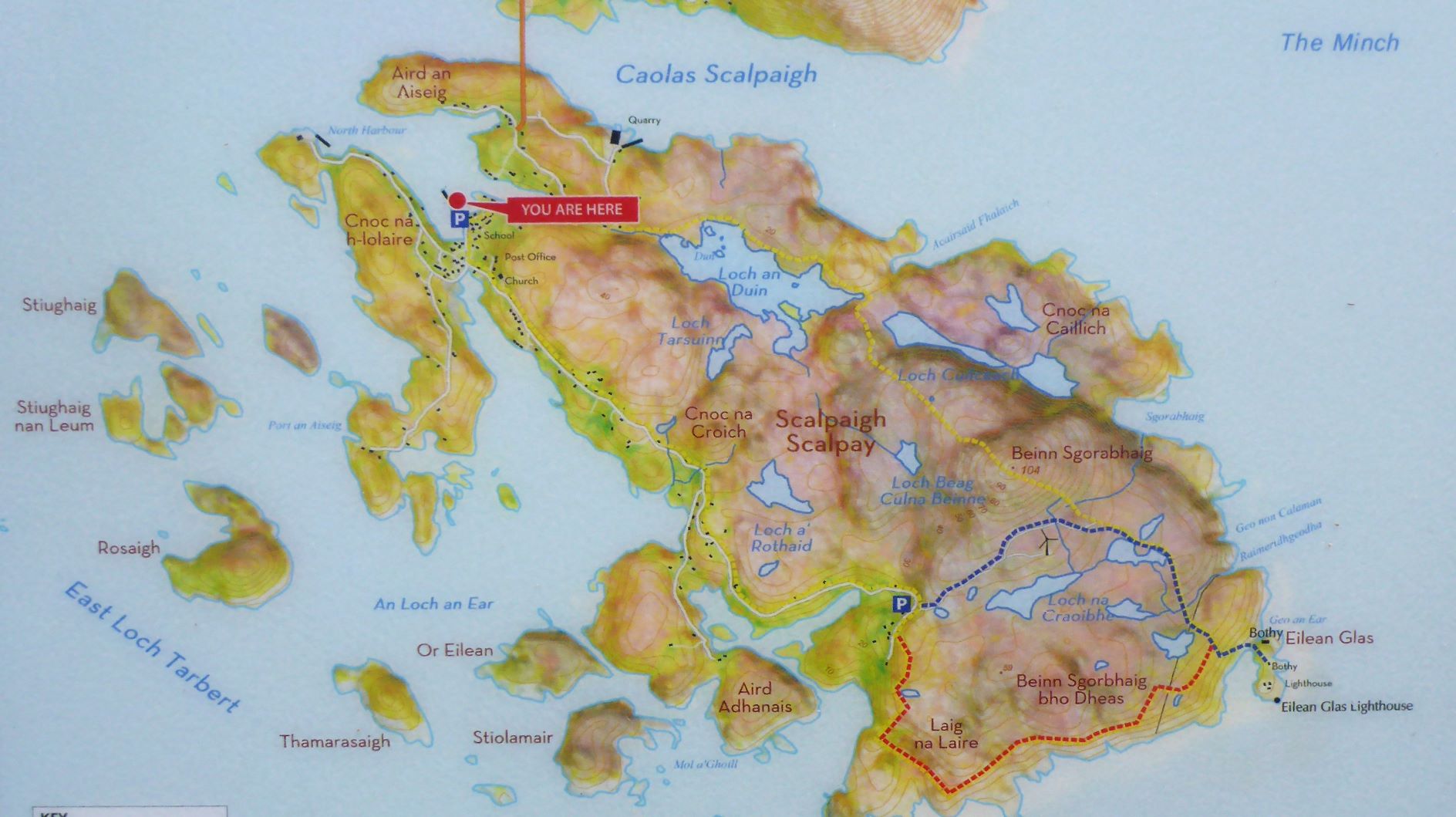
We’re very glad that we made the decision to move all of 4 miles to North Harbour on the little island of Scalpay, which is now connected to the main island of Harris by an impressive road bridge, before leaving the Outer Hebrides. The yacht pontoon is run by Fred, the same manager as the one in Tarbert, and he told us there’d be space in the lee of a large offshore support vessel. North Harbour is a wonderful, natural haven but is open to strong winds from the west; it’s mostly used by fishermen and fish farm vessels.


Once ashore, the place had a slightly run-down air to it. The village school had closed, as had the community shop but there were basic, clean loos and showers and there was the Bistro.. well, we’ll come back to the Bistro. The landscape is green but stony, with tough-looking houses nestled between rocky outcrops and their ‘gardens’ nibbled by roving sheep.


These allotments were known as 'lazybeds' to grow vegetables. Most have been abandoned but a few are still in use 

Thankfully we had dry weather, and even some sunshine (wow, we could use that right now; the weather is pretty awful up here at the moment) so a hike to the lighthouse at the eastern end of the island seemed like a good plan.

As sailors, we are always interested in lighthouses and have hiked out to many a remote spot around the world just to visit one. The architecture, and sheer bloody-mindedness of the people who designed the things, is also fascinating; they were determined to build something interesting and beautiful rather than simply functional. How happy were the labourers who actually constructed the things, as they carried materials out to remote and exposed locations and worked in all weathers, can only be imagined.


Impressive bit of dyke-building, straight into a loch

Eilean Glas lighthouse was one of the first built by the Northern Lighthouse Board and was completed in 1789. Its first keeper, a fisherman from Fraserburgh called Alex Reid, lived and worked out here for 37 years and by the end of his time he was reported to be ‘weatherbeaten and stiff by long exposure to the Point of Glas’ and was pensioned off with an annuity of forty guineas. The new tower was erected in 1824 when Robert Stephenson was the NLB’s chief engineer. A foghorn was added in 1907, which increased the number of lighthouse keepers to three, and the lighthouse was finally automated in 1978. Its rotating Fresnel lens system was dismantled and given to the Royal Scottish Museum and today the operation of the powerful LED light is monitored remotely from the NLB headquarters in Edinburgh.


The compressed air tanks for the foghorn. The original lighthouse tower can be seen behind them.


The Shiant Islands in the distance

Having got our lighthouse fix, we hiked back along the well-marked scenic route which crossed peaty moorland, springy underfoot. 

An excellent day was rounded off with an amazing meal at the North Harbour Bistro; happily we’d arrived on its first opening night of 2021 and the seafood was fantastic.


We’re now back on the mainland, after an excellent sail to Badachro in Loch Gairloch on Saturday and then a complete thrash, in wild wind and rain, yesterday to Plockton. By the look of the forecast, we’ll be here a couple of days and will hope to get some breaks in the rain and wind to explore ashore.


Friday, 11 June 2021

The word of the day is 'dreich'

We’ve had a couple of nights in the little marina of Tarbert, Harris. Yes, another Tarbert, there’s lots of them up here, as mentioned in a previous blog story. It’s a lovely little place, in some amazingly beautiful countryside, but unfortunately the weather has been ‘dreich’, as they say in Scotland. Wet and dull and quite windy too.

Still, the weather allowed us to do a few chores, so the washing is done and a few more boat jobs have been ticked off the list.

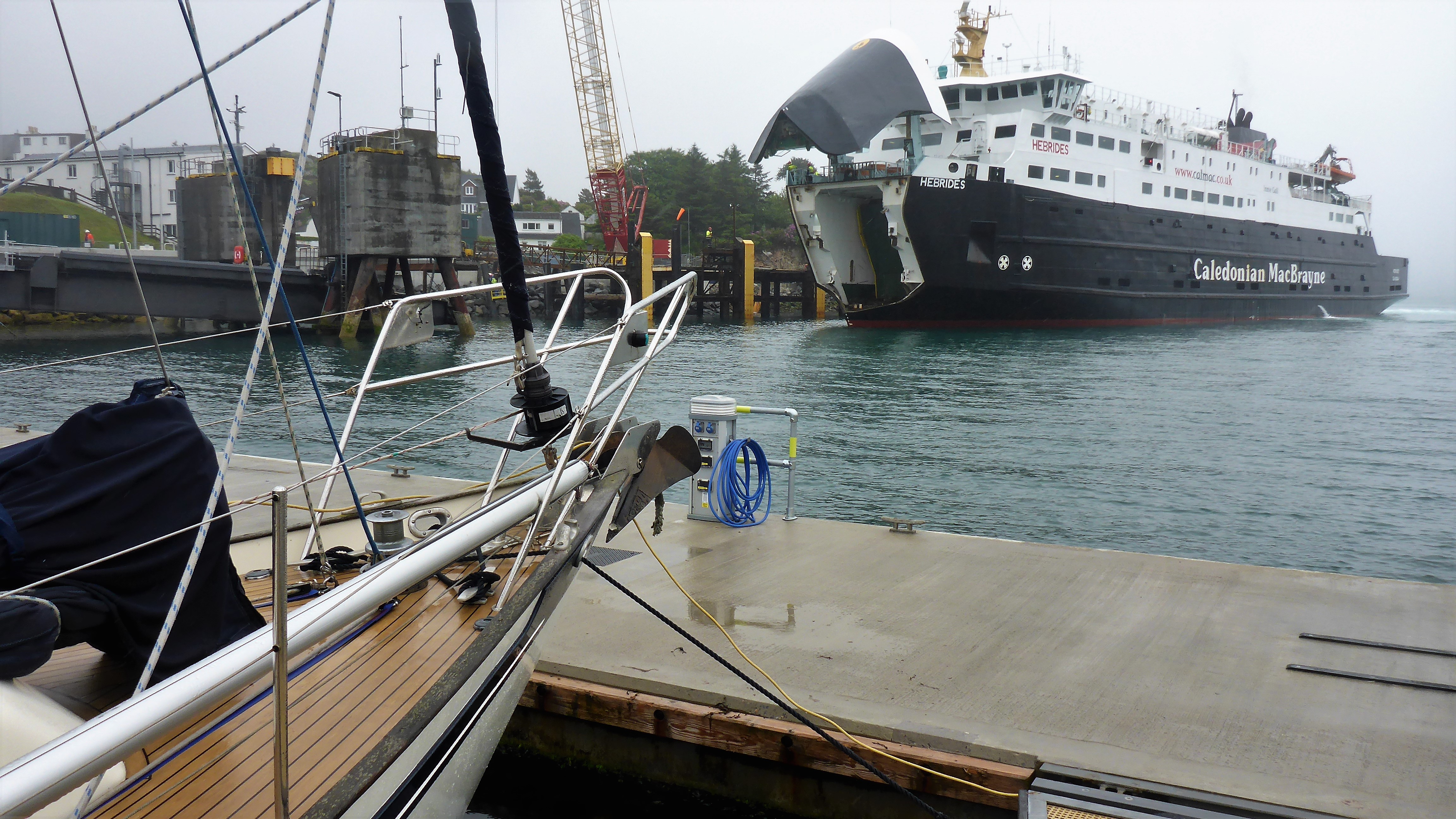
The marina – just a single pontoon, run with great enthusiasm by a chap called Fred – is just opposite the ferry terminal which is undergoing an £18M upgrade for a new ferry. However, the shipyard given the contract to build the ferry, Ferguson Marine in Glasgow, went bust and had to be rescued by the Scottish Government in 2019. The new ferry now won’t enter service until 2023 at the earliest and costs have spiralled.  

The arrival of the existing ferry is quite entertaining as it comes alarmingly close to our berth!


We did manage a brief, 20-minute, spell of clear weather yesterday afternoon before the rain moved in again so managed to get these photos.


Today promises to be brighter but still breezy, so we plan to move all of 5 miles to the little island harbour of Scalpay. There’s not much there as the community-run shop has closed and the famous Scalpay Bistro has yet to re-open (all the hospitality venues here are struggling to find staff); however, if the rain holds off there’s said to be some good hikes to be had on the island. After that, tomorrow looks promising for the crossing of the Little Minch, the stretch of water between here and Skye. With an eye on the calendar, we need to head back to the mainland and start heading south.