Welcome to the Maunie of Ardwall blog

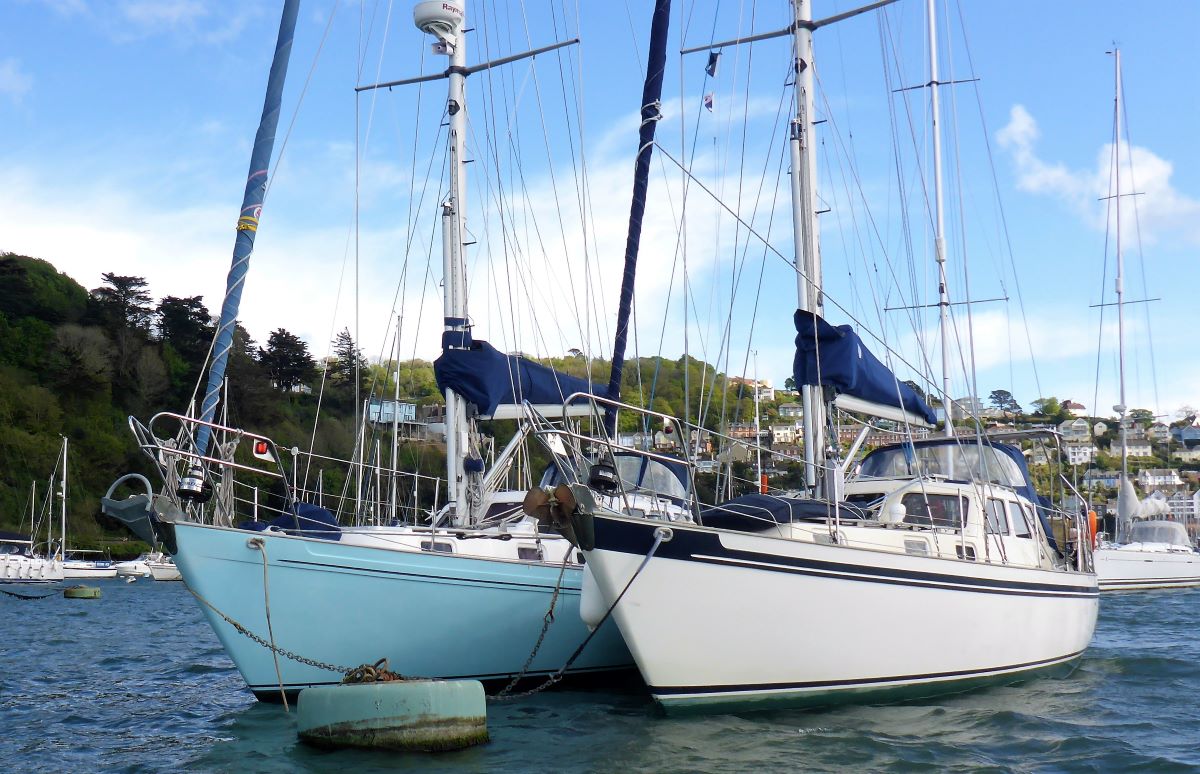
This is the blog of Maunie of Ardwall. After a six-year adventure sailing from Dartmouth to Australia, we are now back in Britain.

Sunday, 12 May 2019

Wonderful Irish sailing

The wind may be on the cool side but we've had sunny, settled weather for the past few days to enjoy this absolutely beautiful part of Ireland.

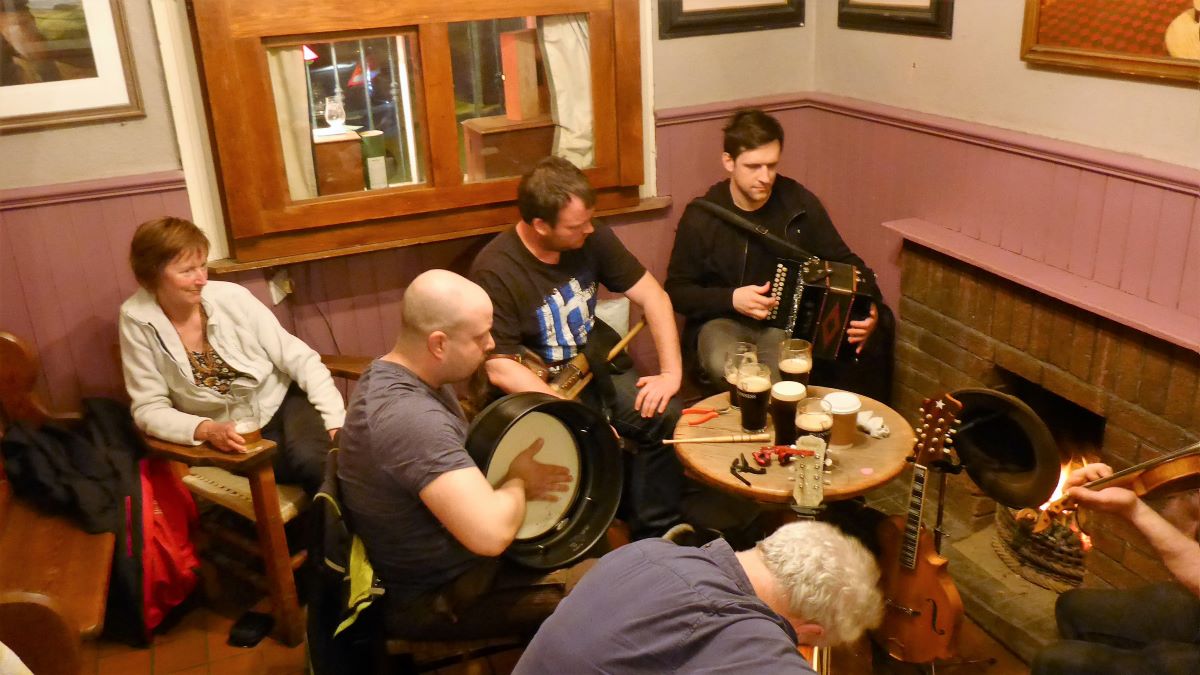
Three nights in Dingle gave us time to recover from the night sail, visit the very good Dingle whiskey and gin distillery and have a brilliant night in the quirky Dick Mack's pub. Dingle is definitely a key stop in the Ring of Kerry tourist trail so there are lots of American and German accents to be heard around town and every pub offers some kind of 'traditional' music for the tourists - often it's not too great. We were very lucky when a group of 6 musicians, 3 Irish and 3 Czech asked if we'd mind if they came into our little back room in the pub to play. They were fantastic and we stayed till after midnight.


Time to move on, so we sailed out of Dingle on Friday and were treated to a farewell wave of the fin by Fungie, the resident dolphin who has made the outer harbour his home since 1983 and has brought a lot of tourist income to the trip boats who take visitors out to see him every day.


We've started to head south but have taken the time to go deep into the Kenmare and Bantry bays to find some sheltered and very picturesque anchorages - first to Sneem and then through Dursey Sound, the narrow gap between the mainland and the island at the bottom left of the map, to head towards Glengarriff.


Flying our Irish Flag spinnaker (a set of stitched photos so the sea gets an interesting texture!)


Going up river in the dinghy to the little town of Sneem


The local wildlife

Our anchorage at the mouth of the Sneem River

Heading towards Dursey Sound

Safely though the narrows

Our track shows we had to keep very close to the island to avoid the shallows in the centre of the sound. The "4KN" on the chart means that the current runs at up to 4 knots (about 5mph) so it's vital to arrive at slack water to avoid being pushed towards shallows or rocks.
We had a great sail on to Adrigole Harbour yesterday, a beautiful but empty bay on the north side of Bantry Bay for a quiet night on a mooring. As forecast, the wind is now increasing from the SE again so we'll move on to Glengarriff, right at the head of Bantry Bay, this morning - it looks really pretty and will offer complete shelter from the wind. 

Thursday, 9 May 2019

Sailing to Ireland

We've completed a couple more, fairly major, boat jobs before heading off to remind ourselves that boats are for sailing, not just mending. The first was to replace the Lewmar hatch at the forward end of the pilothouse; after 21 years it had become pretty crazed through UV degradation of the Perspex.


The old hatch. Of course the new hatch had the mounting screw holes in different places than the old, just to add to the fun. But we can now see clearly through it.
The second, more complex job was to replace the holding tank for the aft heads (toilet) - the tank allows us to avoid pumping sewage into harbours or coastal water so we take it with us until we can pump it out at sea (or at a pump-out station in a marina). We first had problems with the original stainless steel tank in Martinique six years ago when we discovered it was leaking (not good!) and Graham wrestled it out to have a new base welded into it - the story of that hot and unpleasant job is here: https://maunieofardwall.blogspot.com/2013/01/sacrificial-anodes-bilge-ratting-and.html

Anyway. we knew this was only a temporary fix as the tank was pretty corroded at the top end as well so we've now replaced it with a custom-made tank made of HDPE polymer by a company called Tek-Tanks. Luckily for us, Duncan and Elisabeth on Quahog had already done the same job so we were able to order an identical tank. More serious bilge-ratting was involved but the new tank fits perfectly.


New vs old

A perfect fit, just needs the pipes fitting and the locker rebuilding
All done (a full day's work but at least no mosquitoes this time!) - a slightly different layout of the pipe positions required the bilge pump to be moved and a new hole drilled for the pump-out hose 
So now we can go and play for a little while! We thought we'd try for Ireland and, with a few days of cold but favourable NE winds forecast, we decided to travel to the Isles of Scilly first then do a long hop up to SE Ireland.

The 121nm, 17-hour overnight sail to Scilly from Dartmouth was fast and surprisingly bumpy with a lot of fishing vessels and cargo ships to avoid, so neither of us got much off-watch sleep. However a large pod of dolphins (whose squeaks we could hear through the hull) kept us entertained for a while. We were glad to reach Scilly and had a perfect, calm and sunny day there on Sunday to walk around the island of Bryher.


Approaching the northern side of Tresco - quite a sporting entrance with big waves and unfriendly rocks to concentrate the mind of the helmsman whilst the first mate focused on the plotter

On a mooring in New Grimsby Sound - Cromwell's Castle still guards the entrance

The left-over swell caused us to roll a bit so we deployed the 'flopper-stopper' anti-roll system

The beach on Bryher

Looking towards Tresco over New Grimsby Sound. Maunie is the furthest boat to the left

The entrance in much calmer conditions
Suitably recharged and rested, we were looking at weather windows to sail the 220nm up to Dingle. Monday's chart looked promising:


It looked as though we'd get a gentle start, with some motoring, then a nice wind-behind-us spinnaker run followed by quite a sporting arrival into SW Ireland so off we went and that's pretty much exactly what we got:


Sailing into the sunset. After 5 hours with the Parasailor we decided it was prudent to take it down just after midnight and this proved to be a good call as the wind increased in the early hours of Tuesday morning

Di updating the hourly log after lunch, warm inside the pilothouse while the increasing wind was pretty cold (hairstyle by Seasalt, courtesy of a large wave!)
Rounding Bull Rock and turning right to head up the west coast. The wind began to increase and the rain arrived.
The pilothouse is a good place in this kind of weather......

….. especially when you get big waves crashing over the bow!
We no longer have our expensive satellite phone on board so can't access emails or, more importantly, weather updates once we leave land. However we do have some very old technology which is still brilliantly useful: a system called Navtex. We can receive weather and safety updates broadcast by the coastguard from user-selected stations (we set up Niton in the Isle of Wight and Valentia in West Ireland); the system has a range of up to about 250 miles. Our receiver is very old-school as it prints, very slowly, the messages on thermal paper.


It was reassuring to have these twice-daily updates but they reminded us that we needed to keep our speed up to avoid stronger winds on Tuesday night. We had a couple of alternative ports of refuge in mind if things got very wild but we confident enough to carry on.

So, after 33 hours at sea we arrived into Dingle with the wind howling in the rigging - it felt very good to be securely moored up in the little, well-sheltered marina just before nightfall. However, we were delighted with the way the passage had gone, pretty much to plan, and how well Maunie had sailed. It's a credit to her design that, on arrival, we didn't run straight to the local pub but, instead, put the heating on, cooked a pasta supper and had a couple of glasses of red wine. We both slept solidly for 12 hours that night!

So today has been a recovery day - showers, boat-tidying, fish 'n' chips at the local pub and a little explore of town. As evening fell the wind has calmed and the sun made a brief appearance.


Sunset reflected on a fishing boat
Tomorrow will see us hitting a laundry and shopping for fresh provisions before we head out to explore some new anchorages along the coast. The weather forecast promises some sunshine but a return to unseasonable easterly winds which won't be too helpful as we try to sail back south and along the south coast. However we aren't rushing so we will spend a few days exploring the Kenmare River and Bantry Bay, both of which look really interesting and will, of course, be well sheltered in an easterly.


We will continue to update our location, with a few photos, on https://www.yit.nz/yacht/maunieofardwall

Thursday, 25 April 2019

Twins (nearly)

We had a great trip back to Dartmouth, split over two days with an overnight stop on the River Yealm. Day 1's friendly12-15 knot SSW breeze had us sailing very easily and the highlight of the passage was a pod of about 20 dolphins joining us and playing in our bow wave for two and a half hours.

Today's trip was decidedly more bouncy as the wind increased to 20 knots and the sea was a confused surfaces of breaking waves in all directions. A bit uncomfortable for the crew but Maunie took it in her stride. We returned to our mooring to meet up with friends Duncan and Elisabeth who have Quahog, another Vancouver 38P built immediately after Maunie; they are on a shake-down cruise after a lot of hard work on the boat so we organised a mooring share with them. With only 13 V38P's ever built, seeing two together is a rarity and we are looking forward to comparing notes over drinks on Maunie and supper on Quahog this evening.


Tuesday, 23 April 2019

Celebrating with Sir Robin

We had lovely calm and sunny conditions for a couple of nights at anchor off St Mawes, at the entrance to the Fal estuary. A pretty but touristy town, it was busy over the Easter weekend.
Maunie at St Mawes

A traditional pilot cutter from the Isles of Scilly


We then moved over to anchor at Falmouth. It was quite a day, yesterday, to be part of the 50 year celebrations of Sir Robin Knox-Johnston's arrival in Falmouth, having become the first person to circumnavigate the globe, solo and non-stop. His 32ft wooden ketch Suhaili, which he and two friends built in India, has been beautifully restored and he sailed her, accompanied by a fleet of over 40 boats, across the finish line at precisely 15.24 (the time he crossed it in 1969). 

We joined the flotilla so here are some photos:

Lively Lady (built in 1948 and sailed around the world by Sir Alec Rose in 1968 - he stopped in Australia and New Zealand) and Suhaili, moored at the Falmouth Yacht Haven

Sir Robin unveils bronze casts of his footprints, showing his departure and arrival dates

Sir Robin and a fine yacht in the background

Suhaili in very fine condition


Setting out to re-enact the race finish

Some of the fleet, including HMS Mersey

Following Suhaili and Lively Lady towards the finish line. Luckily there was no wind!

Heading back to Falmouth


We are now anchored up river and are planning to head back towards Dartmouth. The period of sunny settled weather will change tomorrow so we'll get favourable SW winds but rain too.

Saturday, 20 April 2019

New pipe, clean bottom, let's go sailing

Usual trends of English Easter weekends, suffering gales and driving rain, have been confounded this year, we're glad to report, so we've taken full advantage of settled, sunny weather to sail west to Falmouth. Of course, this being a sailing trip, the good stuff has to be paid for in advance, so we spent a couple of hard days on maintenance first.

The initial job, to simply reinstall the refurbished heater, turned out to be more complicated, naturally. First, the multi-pin electrical connector socket had suffered terminal corrosion so we had to fit a new wiring loom to the thermostatic switch (Level 3 Bilge Ratting challenge) and then, when we fired up the heater, we could smell fumes coming into the cabin along with the warm air. The 21 year-old exhaust pipe was clearly shot, so new components were ordered and a Level 5 Bilge Ratting challenge (Level 5 is the highest) eventually had the old pipe out and a new one installed.

The old, sorry-looking pipe

One of several holes in the stainless steel inner pipe
The next day's job was to put Maunie onto the Dartmouth scrubbing grid to clean her bottom of 8 months' of accumulated slime and weed. Unfortunately, we were told that the electricity supply (vital for our pressure washer) wasn't working and so we (briefly) considered a quick-lift for a pressure wash at the local marina until they informed us of the price - £368!! So, with a bit of planning, we used two hose pipes on the grid, one feeding the pressure washer and the other providing a supply of cooling water to Maunie's on-board diesel generator. Perfect and very satisfying.


Half-way through the clean. Maunie's Copper Coat antifouling is wearing thin after 8 years of great service so we'll add new coats later this year


We were very lucky with the weather - warm sunshine and a gentle breeze
Hard work done, we could go sailing. Lovely. A nice 12-15 knot Easterly allowed us to fly the Parasailor for about half of the 64nm passage to Falmouth and the trip was enlivened by a couple of close encounters.

Heading towards Start Point

Not the usual sailing vessel to be seen on this coast!

The Dar Mlodziezy is a Polish sail training ship, built in Gdansk in 1982. 357ft long, she has a crew of 40 and takes up to 180 trainees

The Eddystone Light. These isolated rocks poke up out of deep water some 15 miles south of Plymouth harbour and accounted for many shipwrecks until the lighthouse was established. The first light was a wooden structure built in 1698 by Henry Winstanley, a shipowner who had lost two vessels on the reef. It was washed away in a storm five years later.

The current lighthouse was built in 1882 after the rock on which the earlier Smeaton's tower (1760) started to crack. Smeaton's granite tower was dismantled and rebuilt on Plymouth Hoe.
So, after a very relaxed and interesting passage, we anchored off St Mawes at 17.30 on Good Friday and have had a completely calm night. 

Dawn at St Mawes


We'll spend a few days around the Fal and are looking forward to catching up with friends and seeing Sir Robin Knox-Johnston arriving in Suhaili, the wooden yacht in which he won the first Golden Globe single-handed around the world race 50 years ago. He's planning to cross the finish line again on Monday, exactly 50 years to the minute since his triumphant arrival.